Visit The Project Website
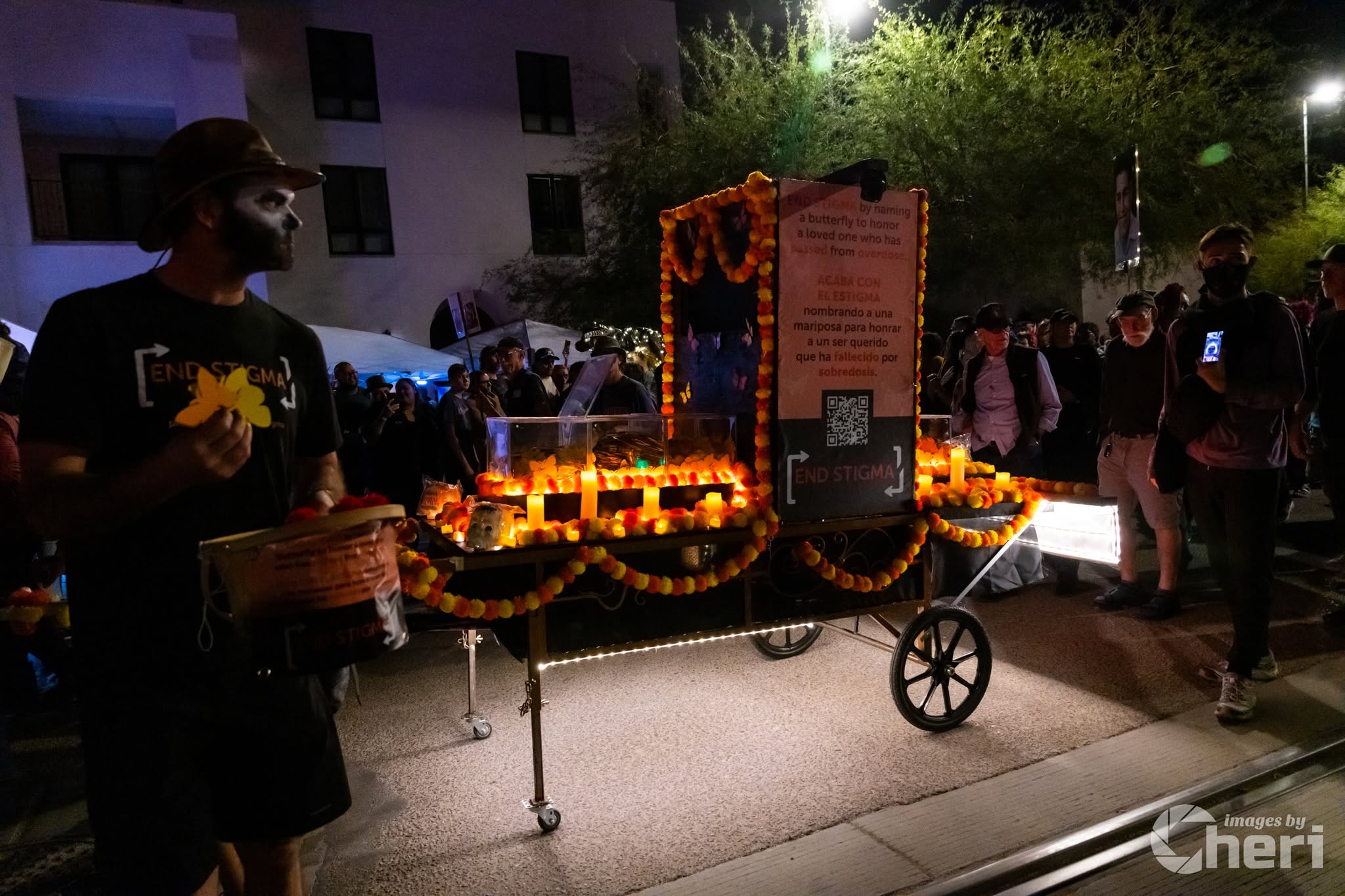
Where some see shame or stigma from a death caused by addiction, members of the Pima County Health Department see an opportunity to bring awareness to an often-overlooked issue. In 2024, the Pima County Health Department (PCHD) launched their interactive float, Wings to End Stigma.
For those who want to honor a loved one who died by overdose, they can submit a picture or video of that person, or a video of themselves sharing the story of how they have been impacted by that loss. Photos, videos, and stories can be submitted via the Wings to End Stigma Submissions form.
“Our participation will help bring awareness to the unacceptably high number of deaths caused by(space)overdoses in our community and it also helps us challenge stereotypes and combat stigma against addiction and overdose,” said Mayra Jeffery, Public Health Manager for the Community Mental Health & Addiction (CMHA) division.
“The procession has been a way to honor and celebrate those who are no longer with us,” she said. “We decided this was also going to be a great way to honor those who lost their lives to overdose in Pima County.” Mayra said that Many Mouths One Stomach, the non-profit group that organizes the procession and related activities, reached out to Pima County to see if they wanted to sponsor the event. CMHA answered the call.
One of the grants used by CMHA covers public outreach, and this idea seemed like a perfect way to use those funds. The float is a mobile dedication space or “ofrenda.” It will feature monitors with scrolling images submitted by community members of pictures/videos to share the story of their loved ones who have passed. Several organizations are collaborating on this project, including HOPE, Tucson Indian Center, and Community Medical Services. In addition, CMHA staff will be distributing wooden butterflies to spectators of the procession. People are encouraged to write the names of loved ones who have died due to overdose on these butterflies. Once they’ve written the names, participants can return the butterflies to CMHA staff or volunteers from the partnering organizations, who will be walking through the crowd with baskets to collect them.
So why a butterfly?
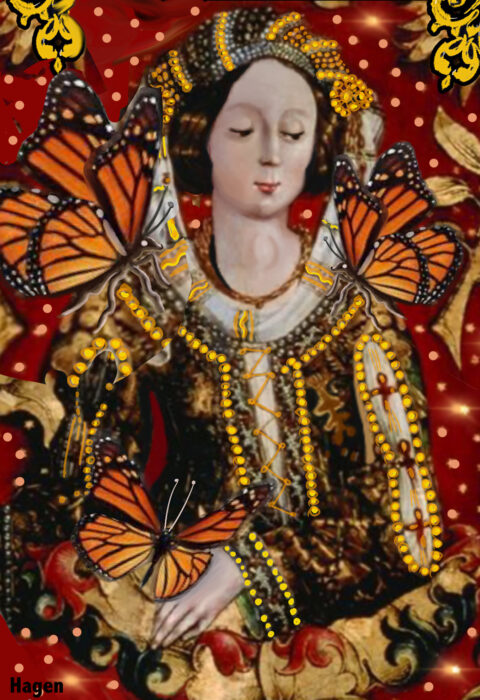
“The butterfly was chosen as a way to represent a life freed from addiction,” Mayra said. “Wings are often a symbol of freedom, movement, and change.” Mayra believes participating in the annual event can help change hearts and minds. “Stigma reduction is the process of eliminating prejudice and discrimination against people, in this case people who use drugs,” she said. “We do this through education and awareness, but most importantly by showing compassion and talking openly about addiction and substance use. Honoring those individuals who lost their life due to substances allows us to do just that and demonstrate that these people, just like anyone else, deserve dignity and respect.”
Wings to End Stigma Submissions
“Our participation will help bring awareness to the unacceptably high number of deaths caused byoverdoses in our community and it also helps us challenge stereotypes and combat stigma against addiction and overdose,” said Mayra Jeffery, Public Health Manager for the Community Mental Health & Addiction (CMHA) division.
